
Required as of February 18, 2027

The Grüner Gürtel®
Battery Data Hub:
The all-in-one solution for the digital battery passport in the EU

Starting February 18, 2027, the digital battery passport will be mandatory for all EU batteries with a capacity of more than 2 kWh. With our SaaS solution Battery Data Hub, you can meet all the requirements of the digital battery passport — efficiently, securely, and in full compliance with the EU Battery Regulation.

  • Compliant with DIN DKE SPEC 99100
  • Centralized, consistent management of all relevant battery data
  • Automated creation and provision of digital battery passport data
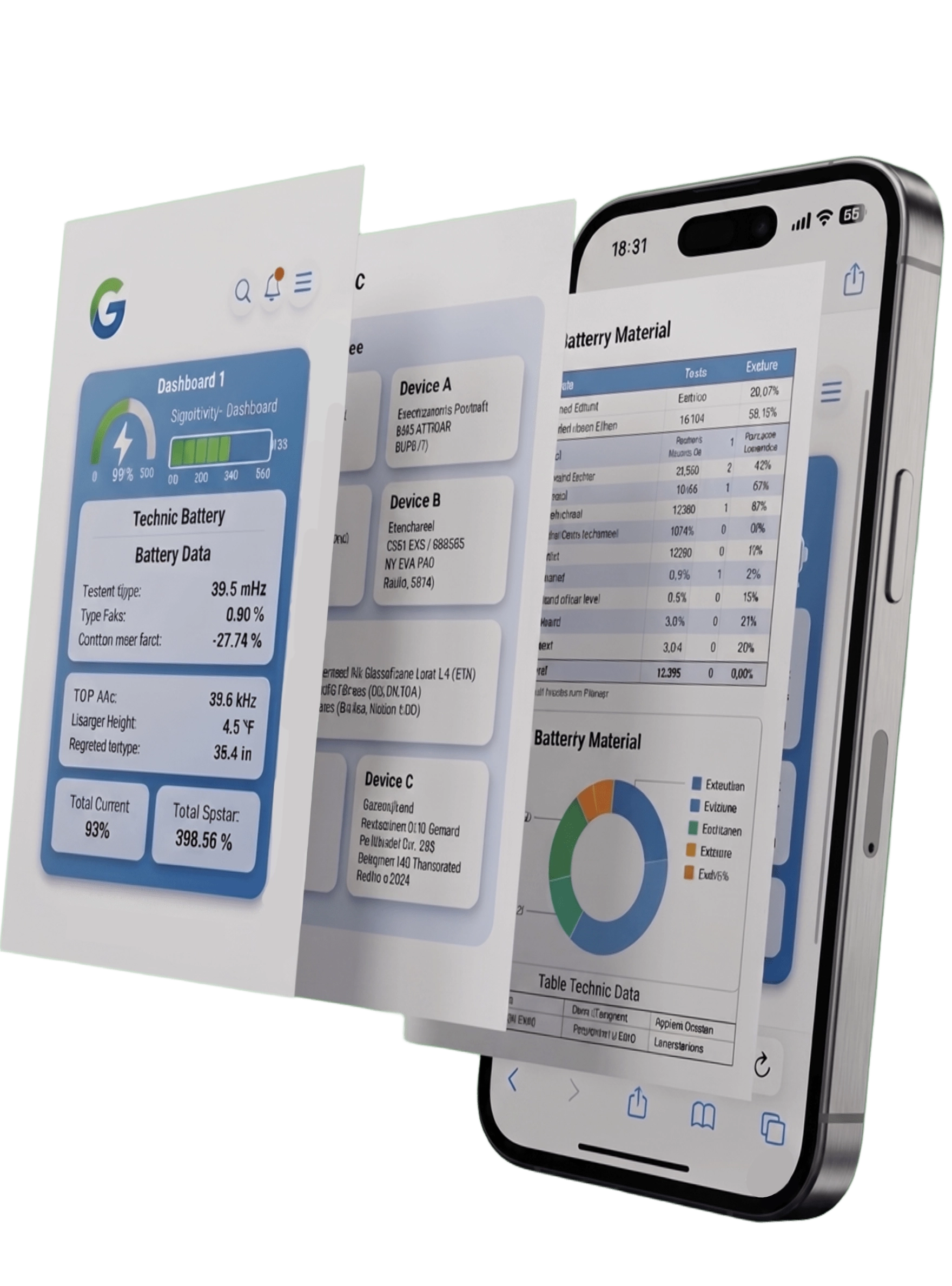
Grüner Gürtel Battery Data Hub
EU Battery Regulation

New Rules. Clear Obligations.

We structure your battery data — from data collection to provision in a centralized platform.

As of February 18, 2027, all companies placing batteries with more than 2 kWh capacity on the market must provide a digital battery passport under the EU Battery Regulation.

Goal
Transparency & Traceability
Information on the origin, composition, carbon footprint, and recyclability of every battery — forming the foundation for sustainable value creation, traceable material flows, and a functioning circular economy.
Responsibility
Obligation for Market Participants
Manufacturers, importers, and distributors must provide and keep the battery passport up to date. This requires new processes, clear accountabilities, and secure, interoperable data provision across the supply chain.
Challenge
Data Complexity & Regulation
More than 100 attributes from different systems must be maintained at high quality across the entire lifecycle — including training, change management, and implementation of complex regulatory requirements.
Mandatory from 2027
Consequences of Non-Implementation of the Battery Passport
The EU Battery Regulation requires all affected companies to implement the digital battery passport. Failure to comply or incomplete implementation can have significant consequences for your business.
Market Ban
Batteries without a compliant battery passport do not meet regulatory requirements and may be excluded from the market
Fines and Penalties
National authorities may impose substantial fines and additional measures for violations
Supply Chain Risks
Business partners may require compliant passport data, which can lead to delays or contractual risks
Retrofit and Recall Costs
Batteries already delivered may need to be retrofitted or recalled as a result
Reputational Risks
Lack of transparency can undermine trust with customers and partners
Without a Battery Passport
Market access restrictions may apply from 2027
Contents of the Battery Passport

The foundation for transparency, sustainability, and a functioning circular economy

The digital battery passport combines all relevant information across the entire lifecycle of a battery
(in accordance with DIN DKE SPEC 99100).

Manufacturer Data
Material Composition
Critical Raw Materials
Carbon Footprint
Charge Cycles & State of Health
Recycling & Second Life
Battery Passport
Who is the Battery Data Hub for?
Market participants, manufacturers and OEMs, importers as well as operators & integrators of battery systems
regardless of industry, system landscape, or data maturity level.
Battery Data Hub

Our Solution — One Platform

Meeting all requirements of the digital EU battery passport simply and efficiently.

The Grüner Gürtel Battery Data Hub is a cloud-based IT platform for the digital EU battery passport. It consolidates all functions for seamless, structured collection and processing of all relevant data, as well as the automated and secure provision of the digital battery passport — including easy integration of external systems and partners via standardized interfaces.
Standardized: Data model in accordance with DIN DKE SPEC 99100 — ready for the digital battery passport under the EU Battery Regulation.
Comprehensive master data management: Ensures consistent battery data and reduces recurring manual tasks.
Secure: Multiple permission levels enable fine-grained, role-based data access.
Auditable & traceable: Integrated logging records all changes to the battery passport.
Transparency: Real-time reporting and analytics provide additional insights into inventory, usage, and lifecycles.
Proven methodology: Structured guidance from planning through go-live.
Requirements analysis: Assessment of your existing processes, systems, and data landscape in the context of the battery passport.
Implementation support: Assistance with integration, configuration, and commissioning.
Training: Compact training sessions for employees and partners on working with the digital battery passport.
Reliable and scalable: Tracks even large battery inventories over many years.
Intuitive web interface: Access from anywhere on all common devices.
No vendor lock-in: Full API access for integration, automation, and custom extensions.
Data sovereignty: Hosting in data centers within the European Union.
Open: Standardized REST API enables easy connection of external systems and prevents isolated data silos.
Fully secured: Access protection via OAuth2 and OpenID Connect.
Grüner Gürtel Process Model

The Smart Path to the Digital EU Battery Passport

From data collection to provision of the digital battery passport, Grüner Gürtel guides companies through the entire implementation process in five structured steps.

01
Data Collection
Ingestion from existing systems
02
Integration
Harmonization of data sources
03
Validation
Structuring in accordance with DIN DKE SPEC 99100
04
Provision
Digital battery passport available
05
Lifecycle Tracking
Continuous update of battery data
Get Started Now
Your Entry into the Digital Battery Passport
Schedule a live demo of the Battery Data Hub
Book an individual consultation
Leverage expertise for a secure and sustainable implementation
Book a Demo
Implement the battery passport efficiently
FAQ

Frequently Asked Questions

Everything you need to know about the digital battery passport and the EU Battery Regulation.

What is the battery passport?
The battery passport is a digital product passport that documents all relevant data about a battery throughout its entire lifecycle — including the origin of raw materials, production information, carbon footprint, technical performance data, usage history, and recyclability.
Who must provide the battery passport?
Responsibility for provision lies with market participants — i.e., manufacturers, importers, or distributors who first place a battery on the EU market. Other actors in the value chain (e.g., raw material suppliers, recyclers) must supply data to ensure the passport is complete.
When does the battery passport become mandatory?
The digital battery passport will be mandatory for all affected batteries in the EU as of February 18, 2027.
Which batteries are subject to the requirement?
The requirement applies to all batteries with more than 2 kWh capacity that are placed on the EU market on or after February 18, 2027. This includes traction batteries (e.g., in electric vehicles), industrial batteries over 2 kWh, and batteries in light transport vehicles, provided they exceed the 2 kWh threshold.
What information does the passport contain?
The DIN DKE SPEC 99100 standard defines more than 100 attributes, including:

·Product and manufacturer data
·Chemical composition & critical raw materials
·Carbon footprint
·Performance data (e.g., State of Health)
·Supply chain and compliance information
·Circular economy and recyclability data
Must the battery passport be updated periodically?
Yes. The standard defines dynamic attributes that must be updated upon certain events — e.g., accidents, deep discharges, or changes in battery condition. The Battery Data Hub supports these updates via open APIs and logs all changes in a traceable manner.
How does the battery passport support recycling and second life?
The battery passport provides transparent data on chemistry, condition, and usage history. This information enables:

·More efficient disassembly
·Higher recovery rates
·Well-founded second-life assessments (e.g., stationary storage)
How is the battery passport provided?
The passport is provided digitally via a central platform. Access is typically via a QR code on the battery nameplate, which links to the digital product file.
Who may access the information in the battery passport?
The EU Battery Regulation defines tiered access levels for:

·EU Commission
·General public
·Notified Bodies
·Market participants with a legitimate interest

The Battery Data Hub supports this fine-grained access control.
What are the consequences of non-provision?
Batteries may not be placed on the market if they do not comply with the requirements of the EU Battery Regulation. Additional possible consequences include:

·Fines determined at the national level by EU member states
·Supply chain risks, as business partners require compliant passport data
·Recalls or retrofit obligations
·Reputational damage due to lack of transparency and compliance
What are the benefits of the battery passport for companies?
The digital battery passport helps companies meet the requirements of the EU Battery Regulation with confidence while creating strategic added value:

·Legally secure compliance through complete data documentation
·Transparency over origin, materials, carbon footprint, and usage
·Improved data quality for ESG reports and audits
·Support for the circular economy
·Competitive advantages through demonstrably sustainable supply chains
·Greater trust with customers, partners, and authorities
ANY QUESTIONS?

We’ll help you implement the digital battery passport

Prepare your company early for the requirements of the EU Battery Regulation –
with a structured, efficient, and compliant implementation.


OUR SOLUTION IS DESIGNED FOR COMPANIES THAT WILL NEED TO MEET THE REQUIREMENTS OF THE EU BATTERY REGULATION STARTING IN 2027

Name
Privacy Policy